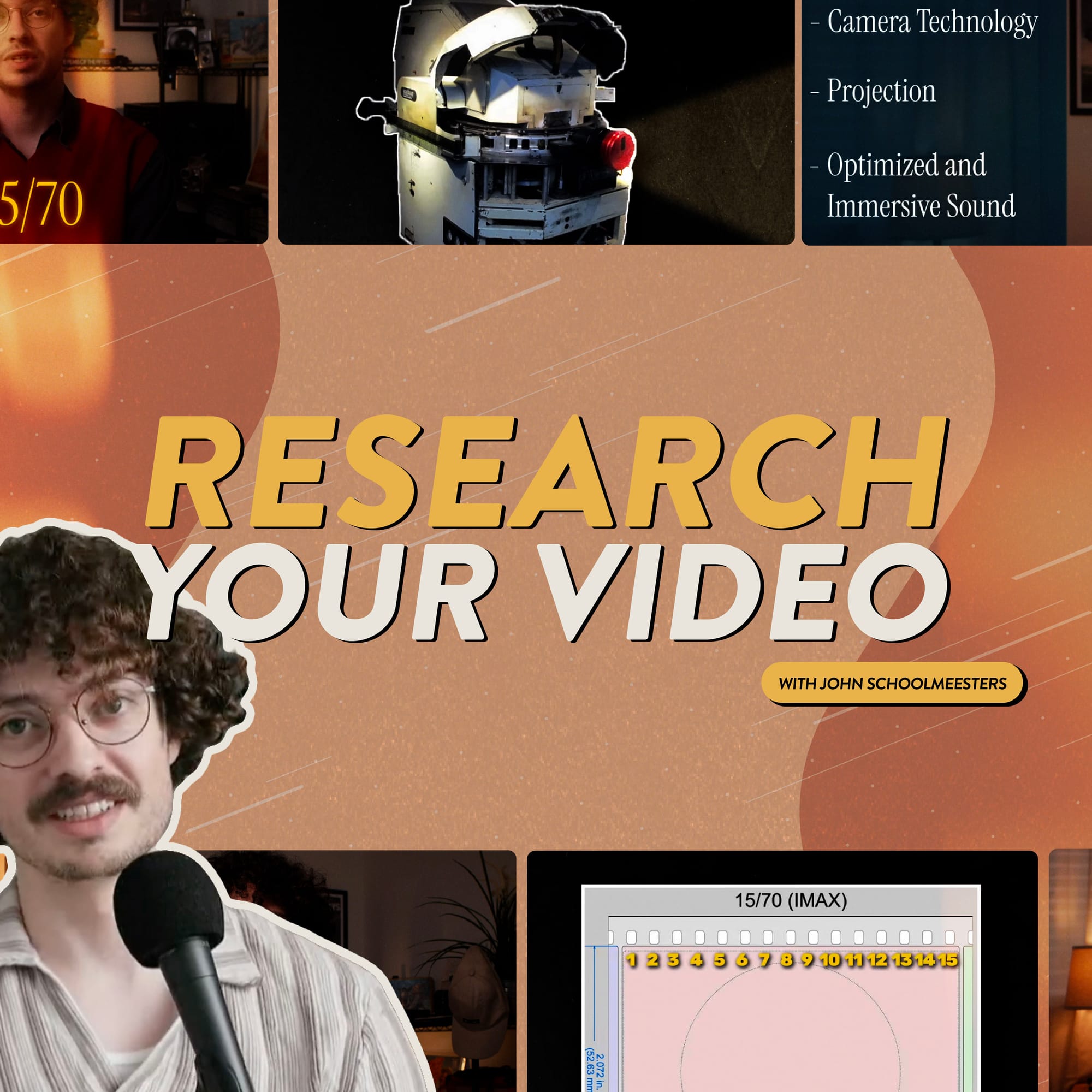
“Research is right up there with storytelling – if the information isn’t solid and you’re not giving people something valuable, the whole video falls flat.”
John Schoolmeesters doesn’t just make videos, he builds stories from the ground up. Known for his thoughtful video essays and tutorials, John starts every project the same way, with research. Long before filming begins, he’s deep in internet archives, academic journals, or flipping through books at the library. Because for John, a story only works when the foundation is solid.
In this Uppbeat interview, John shares his process for researching topics thoroughly, staying flexible, and giving yourself the time and tools to find ideas worth sharing. If you’ve ever felt overwhelmed trying to turn a complex topic into a clear video, this one’s for you.
YouTuber John Schoolmeesters is a filmmaker known for his cinematic video essays and thoughtful storytelling. His channel blends film-inspired visuals, creative colour grading, and in-depth narrative structure, making him a go-to for creators who want to improve their craft.
- Let the research shape the story
- Treat research as a creative skill you can learn
- Use every online and offline source you can
- Don’t rush quality research

1. Let research shape your story
For John, the best stories evolve along the way. Instead of sticking to a rigid plan, John lets the story develop as his research uncovers new angles.
JS: “A lot of the videos I’ve made have come from researching one thing and then finding another topic on the periphery that I’m interested in.”
John’s open approach often leads to stronger ideas. Some of the best content comes from going down rabbit holes and stumbling across the unexpected. As an example, the research John put into exploring the history of aspect ratios led him to realise that topics like IMAX and VistaVision deserved deep dive videos of their own.
Staying flexible about where your research takes you doesn’t mean being careless though. As John gathers information, he’s constantly validating and cross-referencing his sources, checking facts from different places to make sure the story holds up.
JS: “Trying to pull together all the facts to tell an interesting story means validating the information you research. You’re constantly checking what you’ve found and making sure it holds up. As you do that, the story often evolves based on what you discover.”
That kind of curiosity and rigour means the research doesn’t just support the story, it becomes part of discovering what the story actually is.
John’s Key Takeaway:
Stay open to where your research leads. The most engaging ideas often come from unexpected turns.

2. Treat research as a creative skill you can learn
John sees research as a core part of the creative journey. It’s a process that shapes stories, sharpens ideas, and as John puts it: “probably takes up more time than anything else when I’m making videos.”
But it’s worth it. Research can help you make informed creative choices when it comes to the edit. John treats it like a skill that can be developed over time – knowing which sources to trust, what details are actually useful, and how to quickly scan dense material for the gold that will elevate the story.
JS: “You have to learn how to research and you have to learn how to write while speed skimming to read a 30-page paper. That’s often the only way to find those couple facts that will actually work for you.”
That filtering process is what makes research so powerful. It’s not about collecting everything — it’s about curating the details that will give your video depth, structure, and credibility.
Done well, research doesn’t just support your story – it builds it.
John’s Key Takeaway:
Treat research like a creative tool. It’s not just about backing up your ideas, but how you find the story in the first place.

3. Use every source you can – online and off
“The first thing I ever do when researching a video concept is just type my idea into Google and see what shows up.”
Like most creators, John starts his research with a simple search. But that’s only the jumping-off point. From there, he digs deeper using academic databases and forums to bring more technical and credible perspectives into his work, especially when the topic needs more depth.
JS: “JSTOR is a place where I search for a lot of academic thoughts and perspectives. It can be really helpful with the technical side of things. I often dig deep into archives on the internet with old forums full of people collaborating and sharing expertise.”
And if the internet doesn’t have what John needs, he heads offline to dig out the information that’s going to hook viewers into his video. For example, while working on his video about film miniatures, he relied heavily on a book about old-school special effects techniques in cinema history, a resource packed with details he couldn’t find online.
JS: “We assume that everything is on the internet but if you’re researching something that happened in the 60s, for example, back then the main source of information was books, journals and physical newsletters. Going to information sources from the golden era of what you’re researching is really helpful.”
John’s recommendation is to track down original sources, especially if you're covering older topics. The extra work you put into uncovering the full story will pay off in your final video, giving your content credibility.
John’s Key Takeaway:
Don’t stop at page one of Google. Books, forums, academic sources are all treasure troves of information you can use to make your content even richer.

4. You can’t rush quality research
One of the biggest mistakes John sees creators make is leaving their research until the last minute. When you don’t have enough time, you end up rushing the most important part of the process.
JS: “If you set yourself a deadline but only leave yourself two days to research a topic, you’re going to take away the number of books you can read, for sure! It’s going to be stressful trying to sort through different journals and dense academic jargon.”
Tight deadlines often mean cutting corners, especially when it comes to using high-quality sources. Without breathing room, research can feel rushed and stressful. But taking your time opens up space to explore ideas more deeply and often leads you to more surprising, meaningful stories.
JS: “Give yourself time and freedom to let the information guide you, and your research will improve a lot as a result. Plus, it’ll make the process way more enjoyable.”
Whether it’s skimming papers, digging into archives, or just sitting with an idea longer, the more time you give yourself to research, the more your video will benefit.
John’s Key Takeaway:
Rushed research leads to weak stories. Give yourself the space to explore properly – your best ideas need time to surface.

Strong research makes for great content
The way John sees it, research is what sets everything else in motion, but it’s only the start. Whether you’re making a documentary-style video essay or breaking down a technical subject, the quality of your research will shape how engaging your final piece is. Get that part right, and everything else – structure, emotion, tone – becomes easier to refine.
If you want to bring your edits to life and make your stories shine even more, Uppbeat’s free-to-use library of music, sound effects and motion graphics can help shine a light on the best moments you uncover in your research.
Refer and earn with Uppbeat!
Join Uppbeat partners like John and grow your channel with incredible music and sound effects 🤘